


.png)
.png)
Milos has over 70 beaches. That number sounds like a travel brochure exaggeration. It isn't. This is a volcanic island that spent millions of years doing extraordinary things to its coastline. White lunar rock dropping into turquoise water, rust-coloured cliffs hiding coves behind natural arches, stretches of sand that look like they belong somewhere warmer and more tropical than the Aegean.
No two beaches here feel the same. The geology simply won't allow it.
But the hard part isn't finding a good beach on Milos. It’s deciding which ones are worth your limited time, because a week here goes faster than it should. Consider this a starting point.
The Ones Everyone Goes To - And Rightly So
Sarakiniko
There's a reason this beach ends up on more cameras than anything else on the island. The white volcanic rock, smoothed over millennia by wind and sea into something that genuinely looks like the surface of the moon, meets water that has no business being that shade of blue. It's the most photographed spot on the island for good reason, and for once, the real thing holds up.
It sits on the north coast, about 11 minutes from Trypiti by car. No shade, minimal facilities, and in summers the rocks fill up well before 9am. The move is to go early, before the heat makes the stone untouchable, or late afternoon when everything turns gold and the crowd thins out. If you happen to be on the island during a full moon, go then too, it's an entirely different experience.
The actual swimming area is actually quite small. The real pleasure is in wandering the formations, finding your own ledge above the water, sitting there, and letting the morning disappear.
.png)
Firiplaka
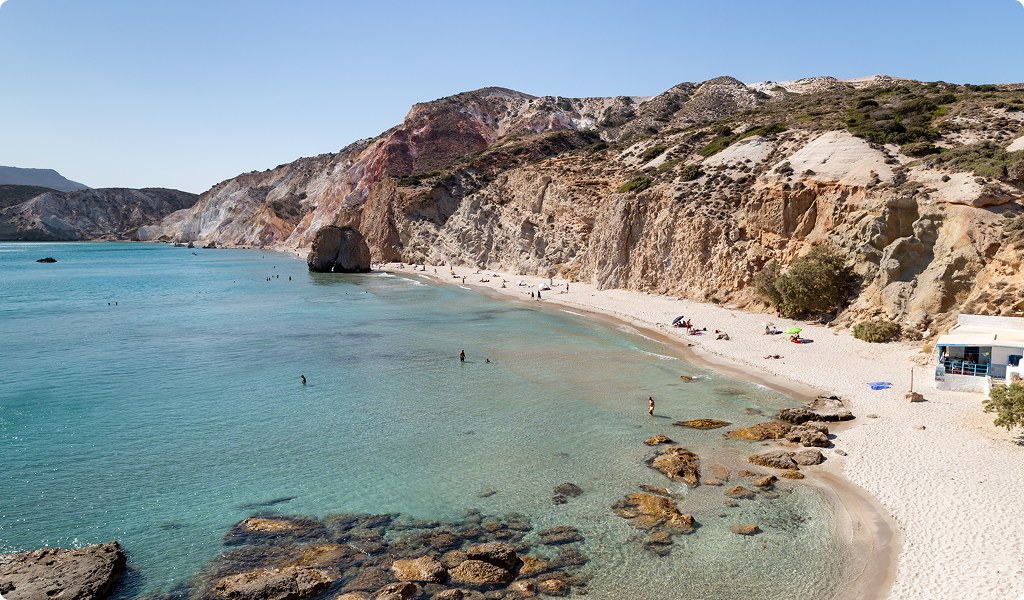
If Sarakiniko is the spectacle, Firiplaka is the long, unhurried day. Wide and generous, flanked by volcanic cliffs in shades of deep red and pink, with shallow water that earns every comparison it gets to the Caribbean. One side is organised with sunbeds and a bar; the other is left well alone. Pick based on what kind of day you're after.
It sits on the south coast, which becomes a practical advantage in July and August when the Meltemi blows hard from the north. Firiplaka stays calm when the northern beaches don't.
There's always room, and the afternoon light here is something you won't forget in a hurry.
Paleochori
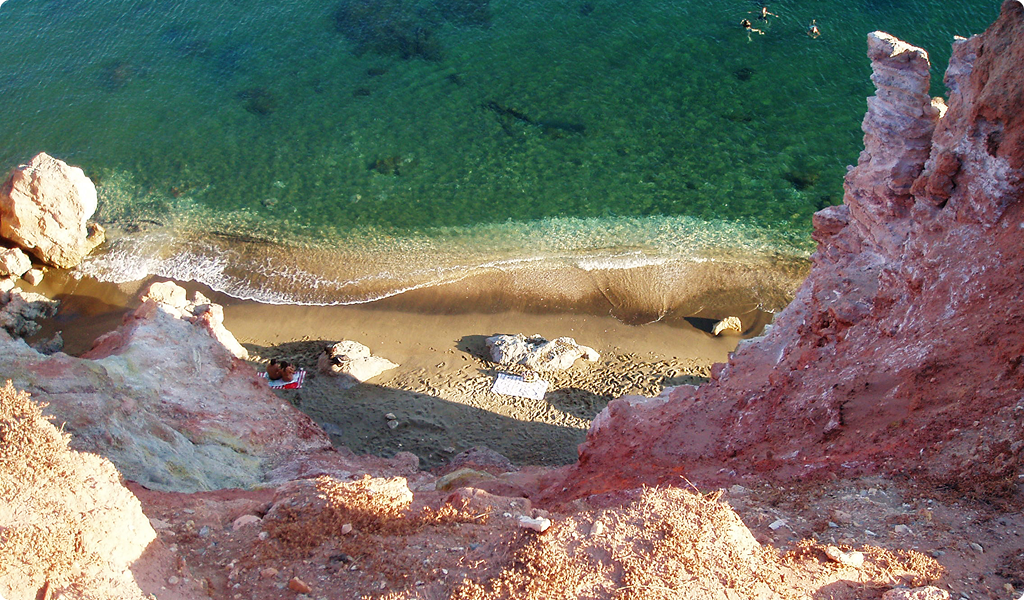
Paleochori is where Milos reminds you that the island is still, technically, a volcano. The seabed has thermal vents - actual hot springs bubbling up from below - and in the shallower sections the sand gets warm enough that water shoes are genuinely useful. The cliffs behind are striped with mineral colour: orange, red, pale yellow. It looks like someone has been painting.
There's a restaurant here that cooks food in a pit dug into the volcanic sand. Worth ordering something just for the story.
The Ones Most Tourists Miss
Plathiena
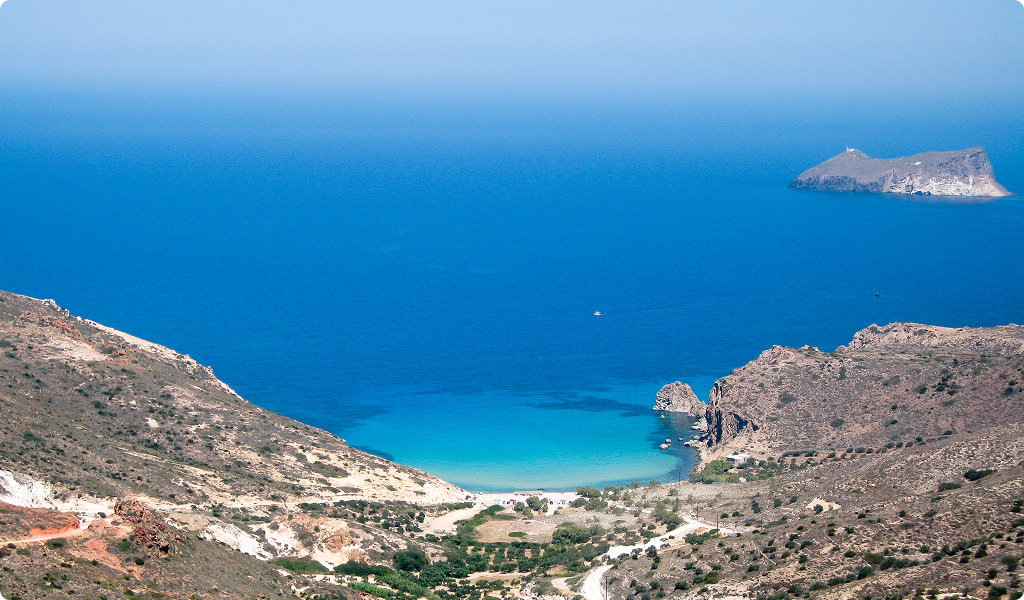
Two kilometres from Plaka, easy to reach, and still somehow off most people's radar. A sandy cove with tamarisk trees offering actual shade (a genuine luxury on this island), calm water, a small beach bar, and a sunset that the locals have been quietly keeping to themselves for years. Less of a destination, more of a discovery.
Tsigrado
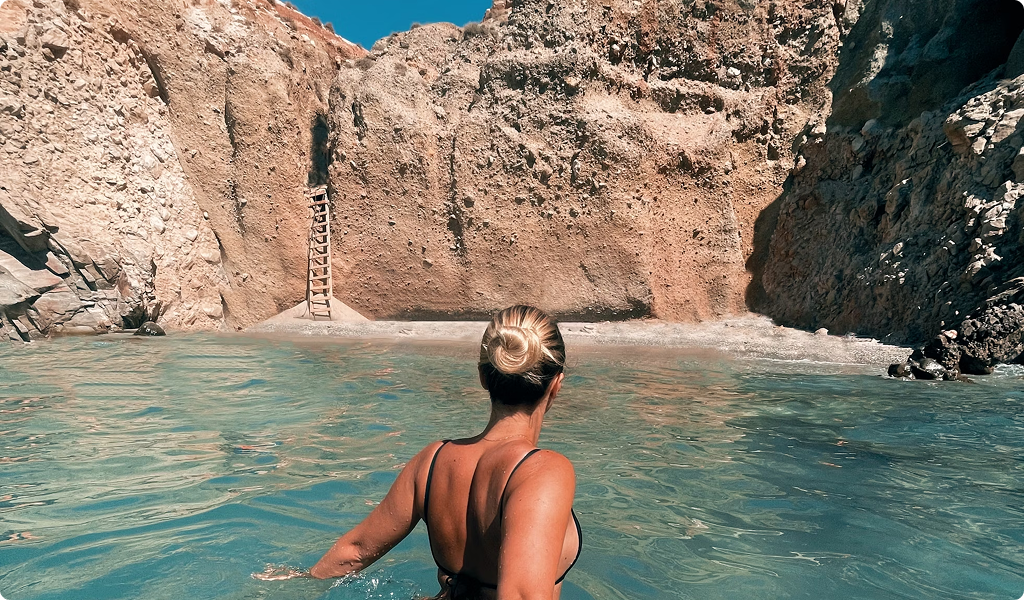
This one asks something of you. The beach sits at the bottom of a narrow channel cut into the volcanic cliffs, reached by descending two wooden ladders with the help of a fixed rope. It sounds more dramatic than it is (most people manage it just fine) but it's not for young children or anyone with limited mobility, and keeping your bag light on the way down is practical advice worth taking seriously.
Once you're down there, though, it’s worth the effort. Turquoise water, small sea caves to swim through, a natural privacy that the ladders quietly enforce. Go early or late afternoon when the beach isn't at capacity and the light is at its best.
The Ones You Can Only Reach by Boat
Gerakas
There's no road to Gerakas. It sits on the southern coast and the only way in is by sea. The water runs a shade of turquoise that tends to stop people mid-swim just to look at it. Most visitors encounter it as a stop on a full-day boat tour, and it's consistently the moment people talk about on the way back.
Papafragas
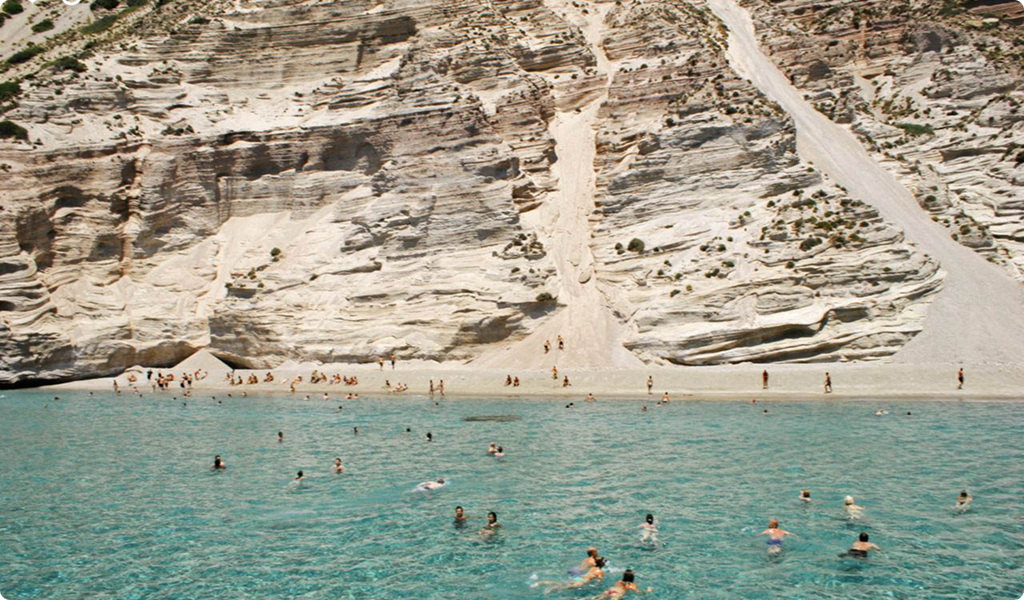
The cliffs above Papafragas are worth the visit on their own. Tall, narrow walls carved by the sea into something that feels more like a canyon than a coastline. Access down to the beach is closed due to rockfall risk, so the beach itself stays off limits. Regardless, the view from the path above is striking, and the cave pools are best explored by swimming in from the sea on a boat tour.
The West Coast You Can't Drive To
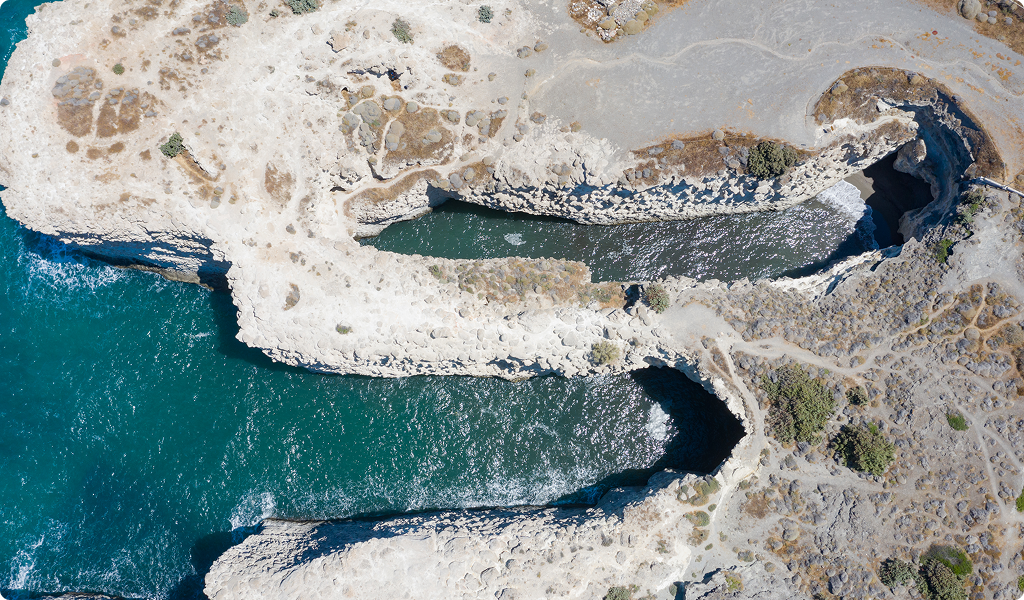
Some of the island's most unspoiled beaches have no road leading to them at all. Kalamos is one: a strip of pristine sand, clear water, and the kind of quiet that only exists somewhere difficult to reach. A boat day is the only way to see this side of Milos, and it also happens to be one of the better days you'll spend on the island.
Swimming in the Fishing Villages
The fishing villages of Milos offer something different. Beach days where the setting does more work than the sand.
Klima
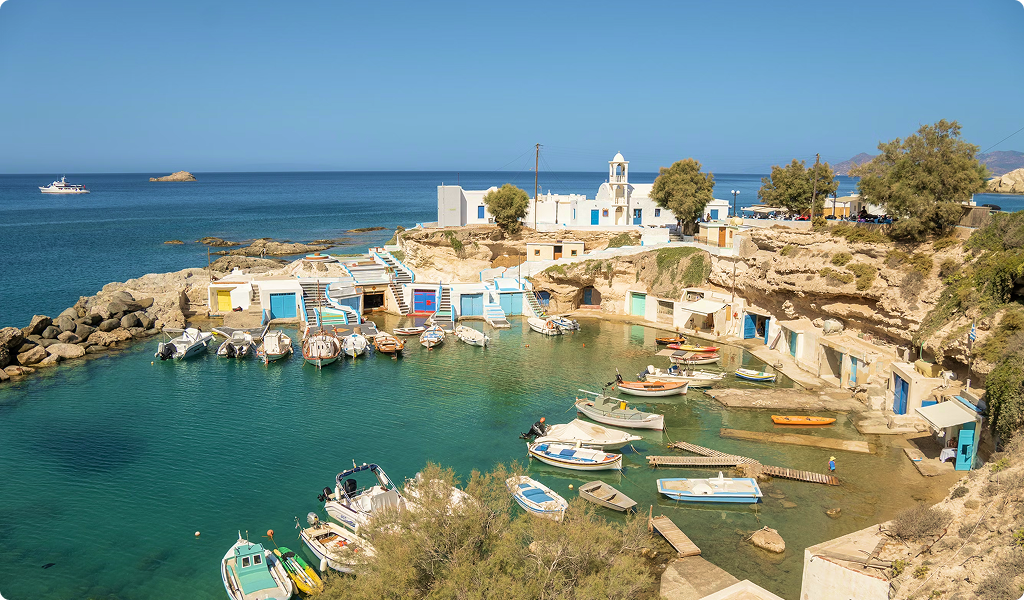
Sitting directly below Trypiti, Klima is old syrmata: the traditional two-storey fishermen's boathouses in faded blues, yellows, and reds, built practically into the sea. You swim off the dock, dry on the steps, and eat at a restaurant where the tables sit close enough to the water that the waves feel like part of the meal.
Firopotamos
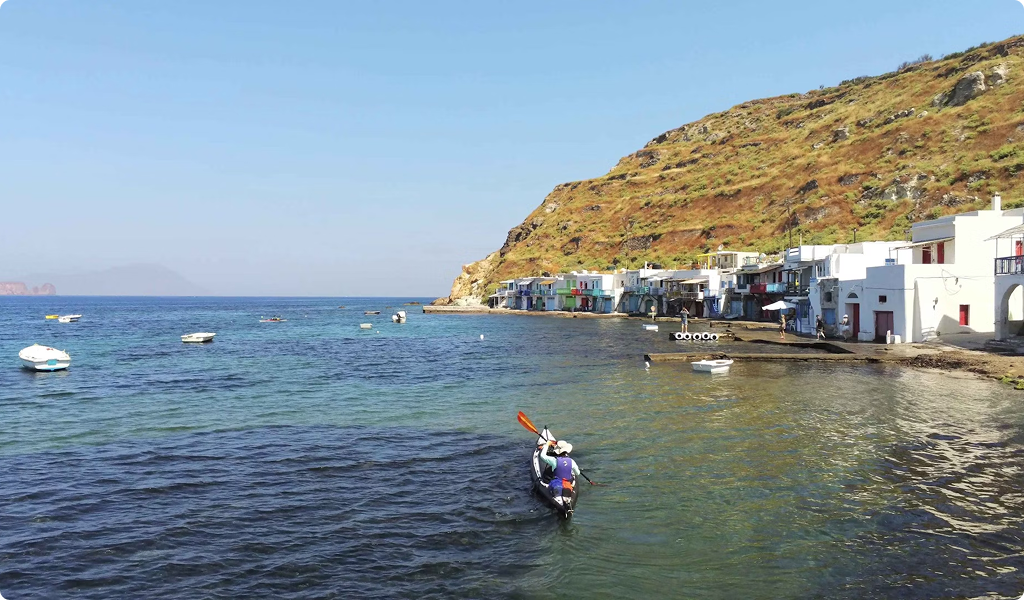
Tucked into the northwestern coast, it's a small sheltered bay ringed by the colourful syrmata that Milos is known for. The beach is a mix of sand and pebbles, the water is clear and calm, and there's a cantina for cold drinks when the sun gets serious.
Mandrakia
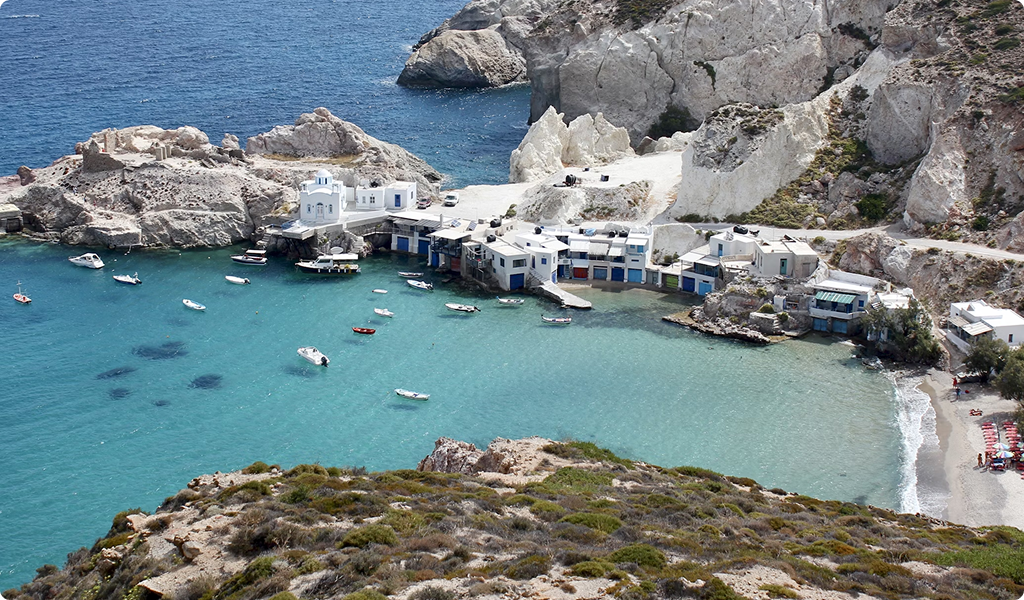
This is the smallest of the three: a handful of syrmata, a little church by the water, and a restaurant perched at the cliff edge above the bay with views over everything.
Getting Around: Car, Boat, or Bus
Car or ATV
It’s the most practical choice for most people. Having your own vehicle means going when you want, staying as long as you like, and reaching beaches that public transport simply doesn't cover. An international driving licence is required for cars and scooters on Milos.
Bus
Buses connects Adamas to the main beaches like Sarakiniko, Paleochori, and Firiplaka reasonably well in summer. It won't take you everywhere, but it handles the most popular spots. Pick up the current timetable at the port when you arrive.
Boat
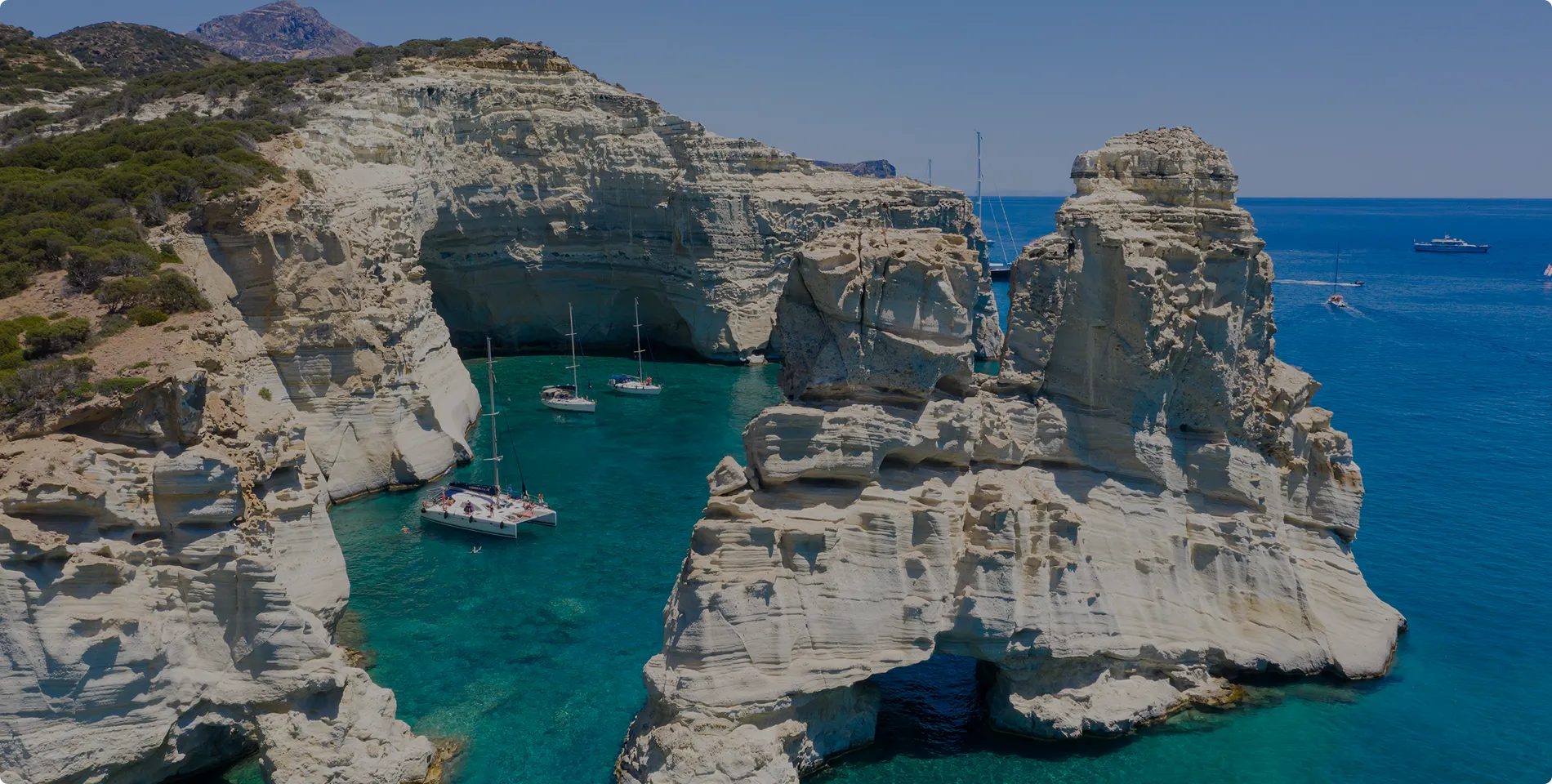
This is a non-negotiable for anyone wanting to see a meaningful portion of the island's coastline. Kleftiko, Gerakas, the west coast - none of it is reachable by road. A full-day tour covers the ground, and the island from the water is a genuinely different experience from the same island on land.
A Word from Efi
Thirty-five years on this island means knowing which beach works on which day, in which wind, for which kind of person. When you arrive at Efi's, just ask.
.webp)
.webp)
.webp)
.png)