


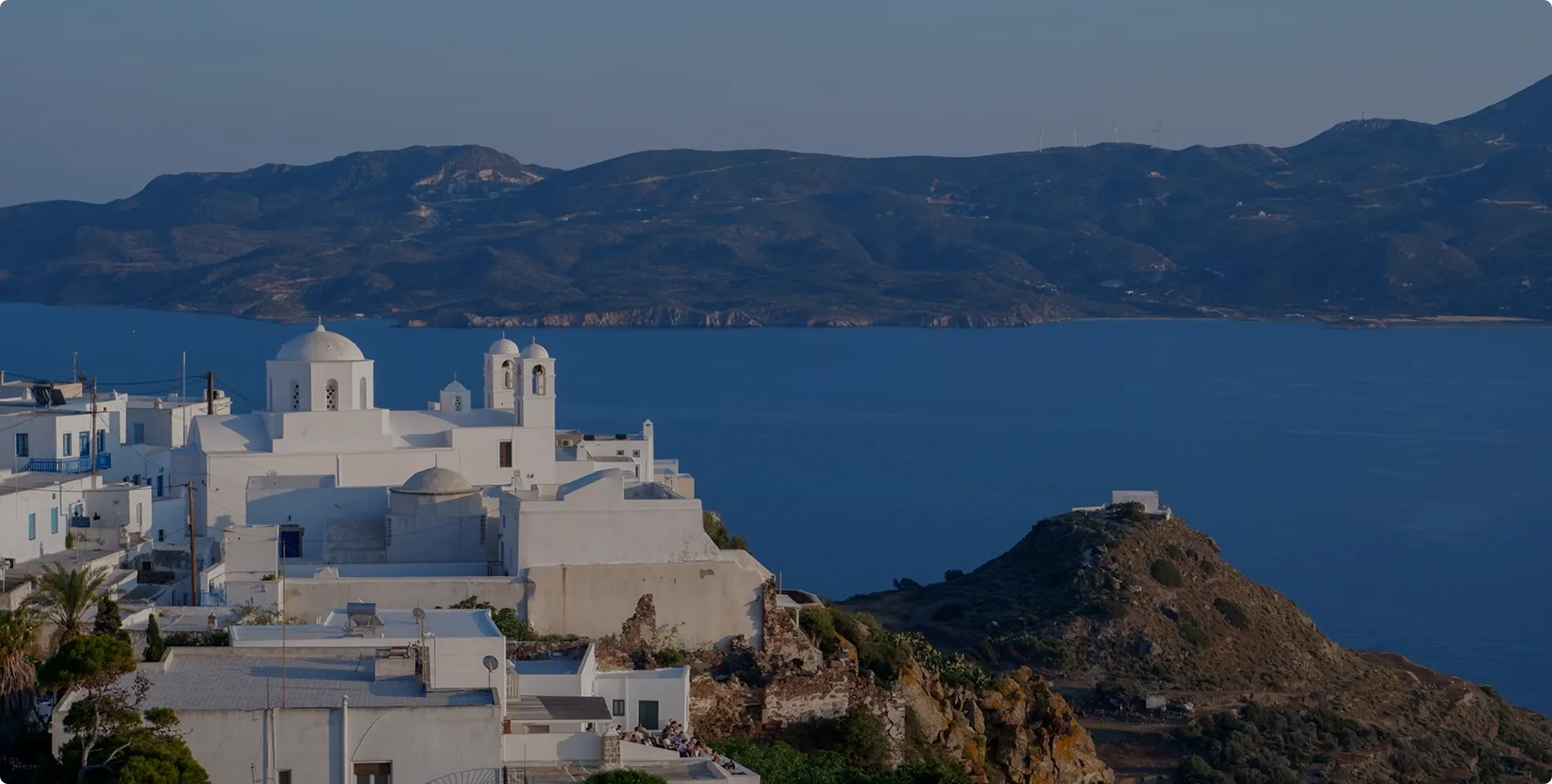
Most people come to Milos for the beaches, and that makes perfect sense. But there's another side to this island, older and stranger than anything the coastline can offer, and it's sitting right on the doorstep of Trypiti. A short walk connects three of the most remarkable historical sites in the entire Aegean, and on most summer days, barely anyone takes it.
This is that walk.
The Catacombs
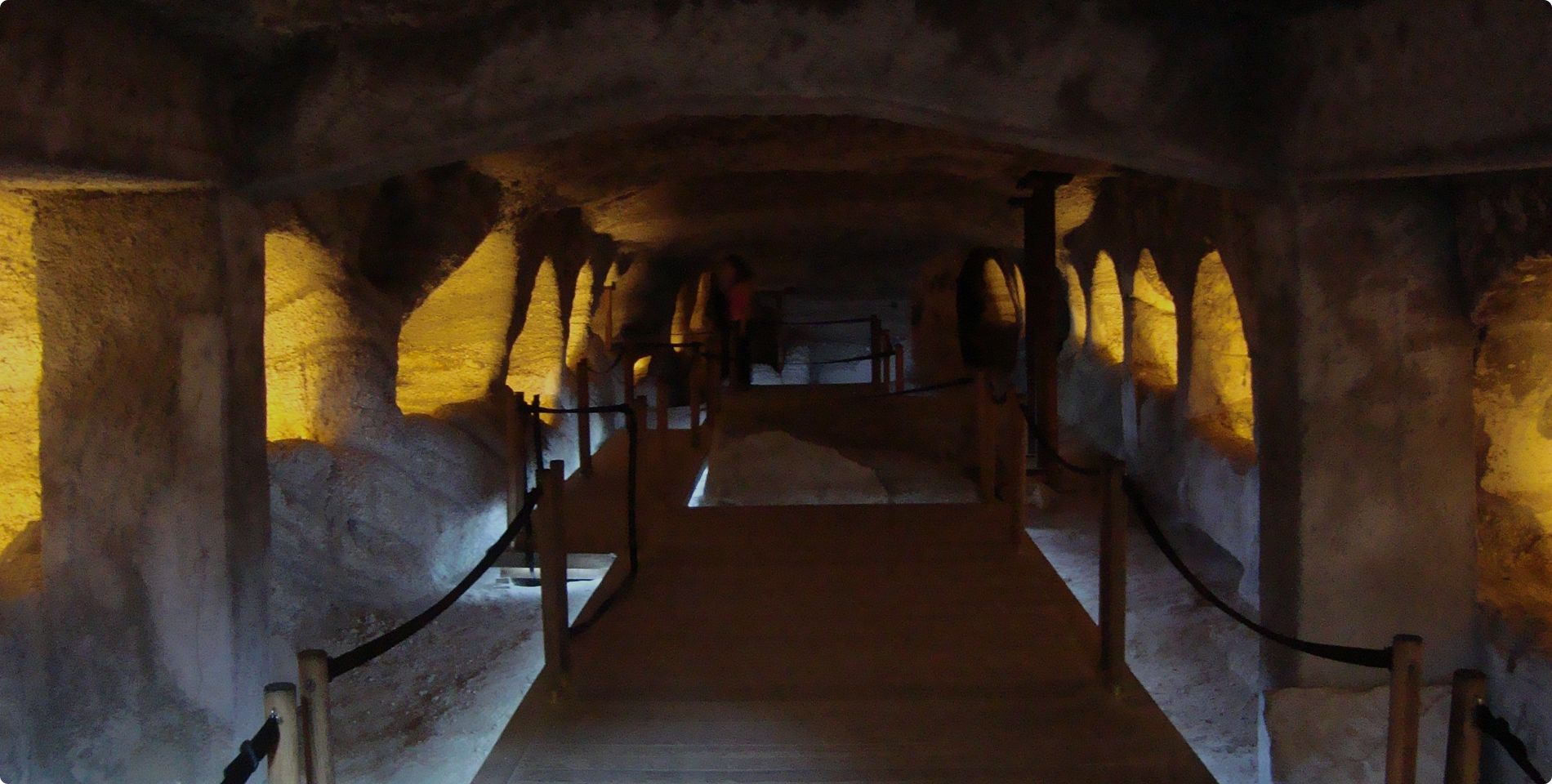
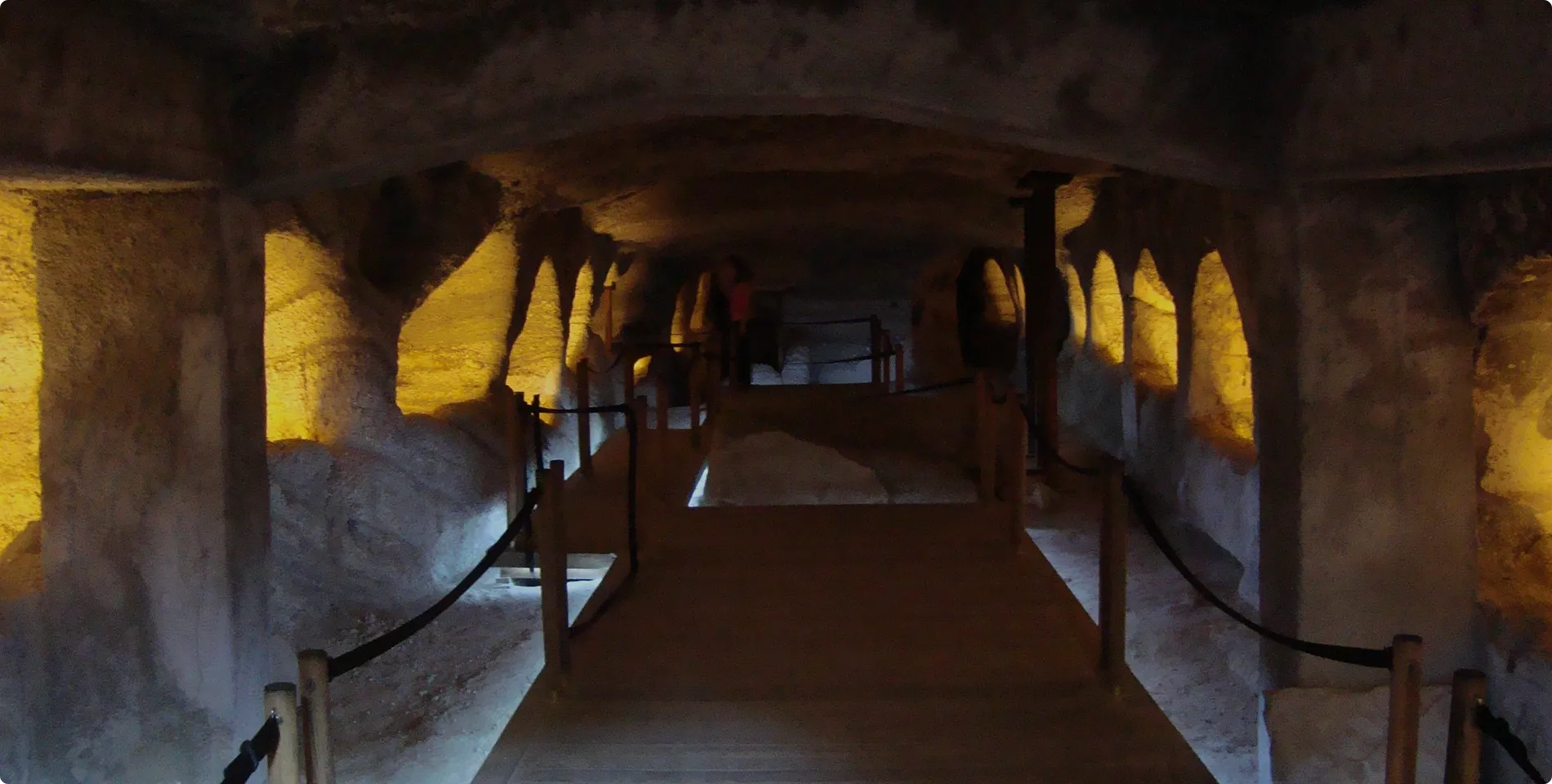
Carved into the volcanic rock on the hillside below Trypiti, the Catacombs of Milos are the only early Christian catacombs in all of Greece and among the most significant outside Rome and the Holy Land. That's not a small thing.
They were built in the 1st century AD, during the Roman period, when Christianity was still being actively persecuted. Early Christians on the island dug these tunnels partly to bury their dead with dignity - they believed in the resurrection of the body, and Roman burial practices didn't accommodate that - and partly as a place of worship and refuge, hidden from the authorities who hated them. The labyrinthine layout was deliberate. If Roman soldiers ever came looking, they were supposed to get lost.
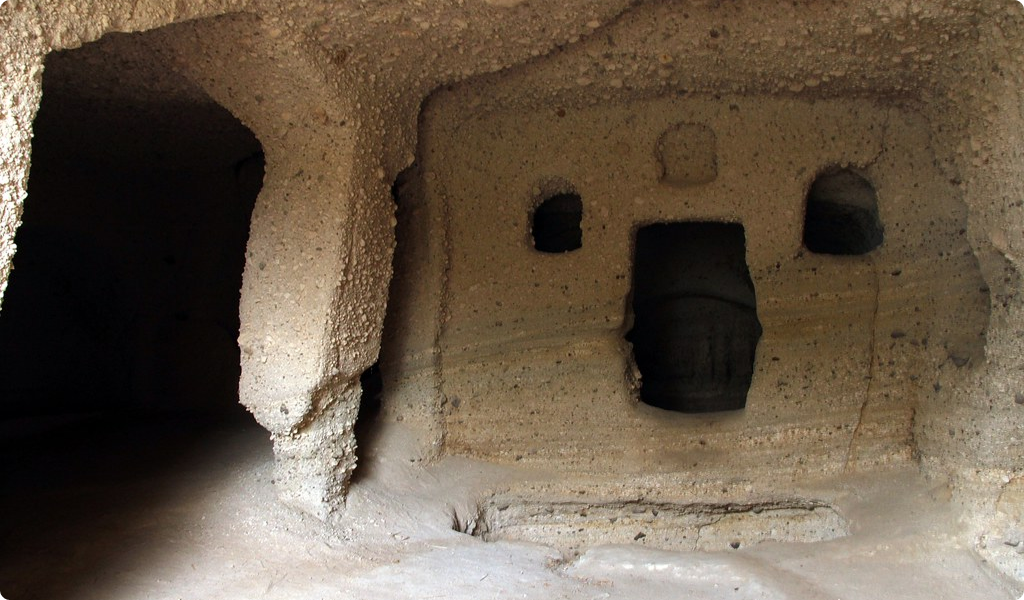
The network runs for around 184 metres, carved into three separate galleries. Around 291 arched tombs line the walls (the arcosolia) and estimates of the total number of people buried here range from 2,000 to as many as 8,000.
Only Gallery B, known as the Catacomb of the Elders, is open to visitors. Inside, you'll find the island's only two-storey tomb, fragments of inscriptions in red capital letters, and what's believed to be the tomb of one of the first bishops of Milos.
Visits are guided and last around 15 minutes. It's brief, but the place has a weight to it that stays with you long after the tour.
The Ancient Theater
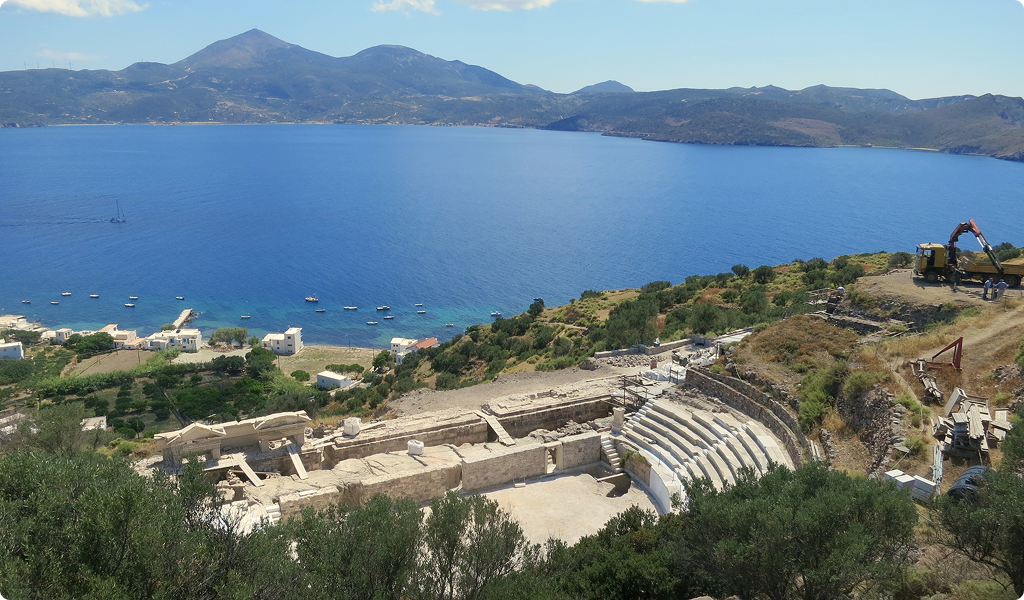
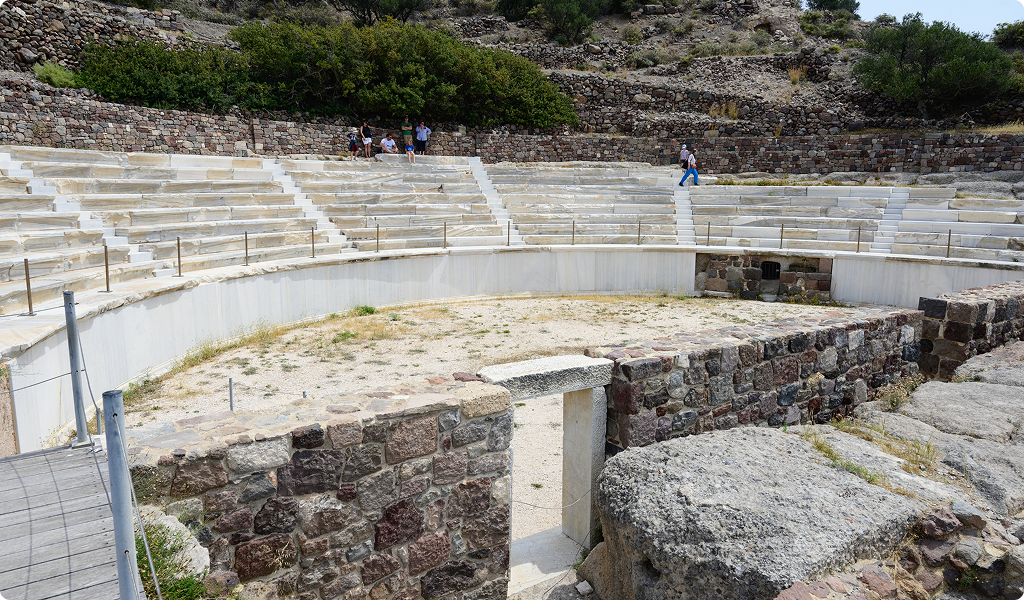
A five-minute walk from the catacombs brings you to the Ancient Theater of Milos: one of the best-preserved theatres in the Cyclades, and one of the most beautifully positioned anywhere in Greece.
The original structure dates to the Hellenistic period, around the 3rd century BC. The Romans later rebuilt it in marble - Parian marble, the same material the Venus de Milo was carved from - and at its peak it could hold an audience of 7,000.
What remains today is the orchestra, the stage, seven marble rows, and the view: a wide panorama down over Klima and out to the sea, framed by the same volcanic landscape that surrounds everything on this island.
There's no entrance fee. The site is open. And on most days, it's nearly empty.
Where Venus de Milo Was Found
Between the catacombs and the theater, a small information board marks a patch of unremarkable ground. This is the spot.
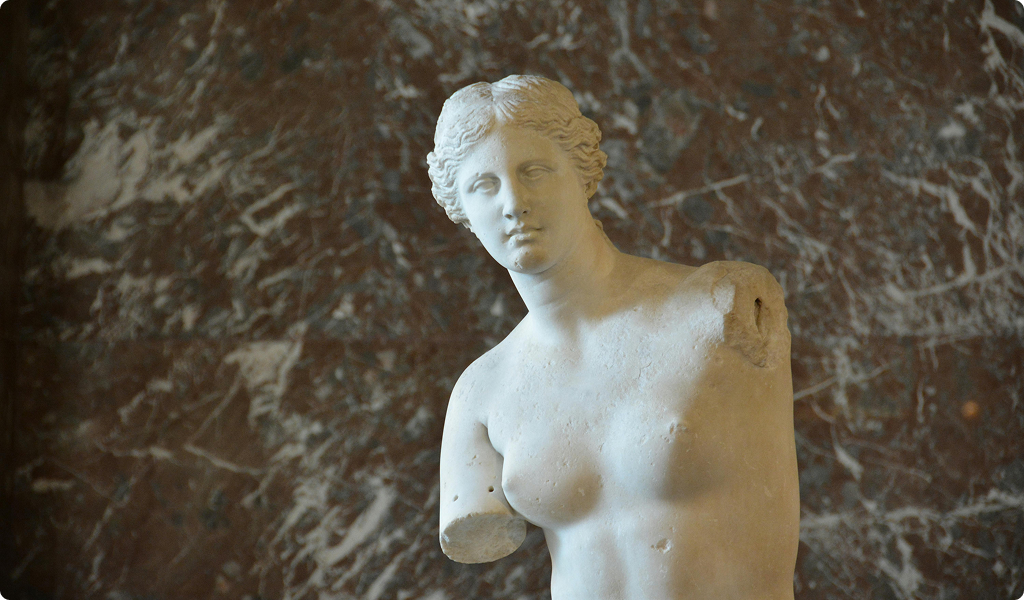
On April 8, 1820, a local farmer named Yorgos Kentrotas was removing stones from a wall for building materials when he uncovered two large pieces of marble: a nude upper torso and a draped lower body. A French naval officer, Olivier Voutier, happened to be on the island that day and immediately recognised what had been found.
The statue was carved from Parian marble in approximately 130-100 BC and is believed to depict Aphrodite, the Greek goddess of love. Within a year of its discovery, through a combination of diplomacy and what some on the island still describe as outright appropriation, it was in France. King Louis XVIII presented it to the Louvre in 1821, where it has been ever since.
A full-scale replica stands in the Archaeological Museum in Plaka. There's also a campaign (still active) to bring her home.
Two Museums Worth Your Time
The Mining Museum, Adamas
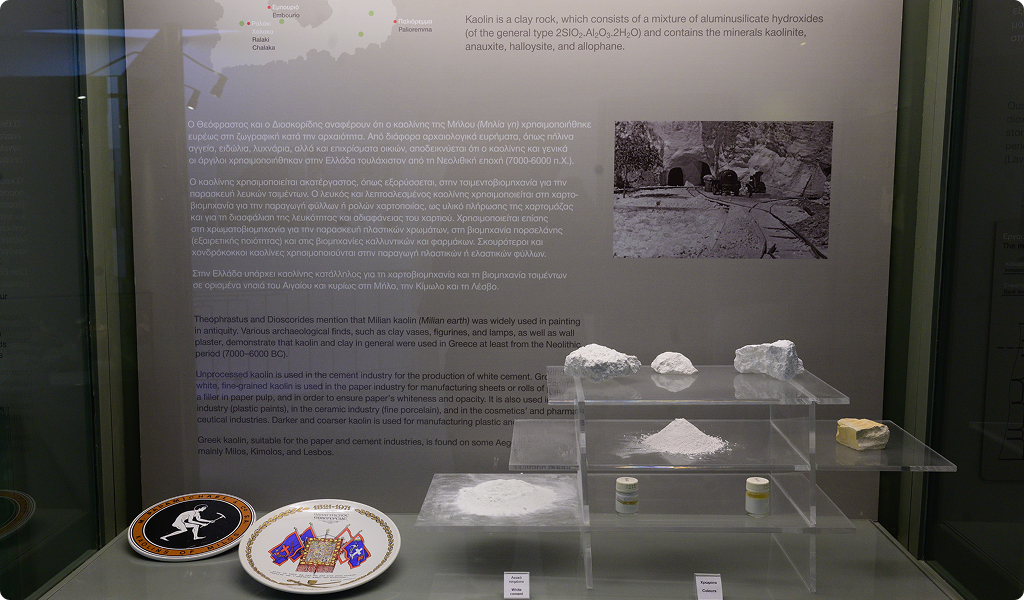
Milos has been a mining island for over 11,000 years - longer than most civilisations have existed. The Mining Museum in Adamas tells that story well, across two floors of exhibits covering the island's mineral wealth: bentonite, perlite, kaolin, obsidian, sulphur, and more. There's also a documentary in the basement featuring interviews with retired miners talking about the reality of their working lives - honest and quietly moving.
It's on the waterfront, easy to reach, and consistently under-visited given how good it is. Allow around an hour.
The Ecclesiastical Museum, Adamas
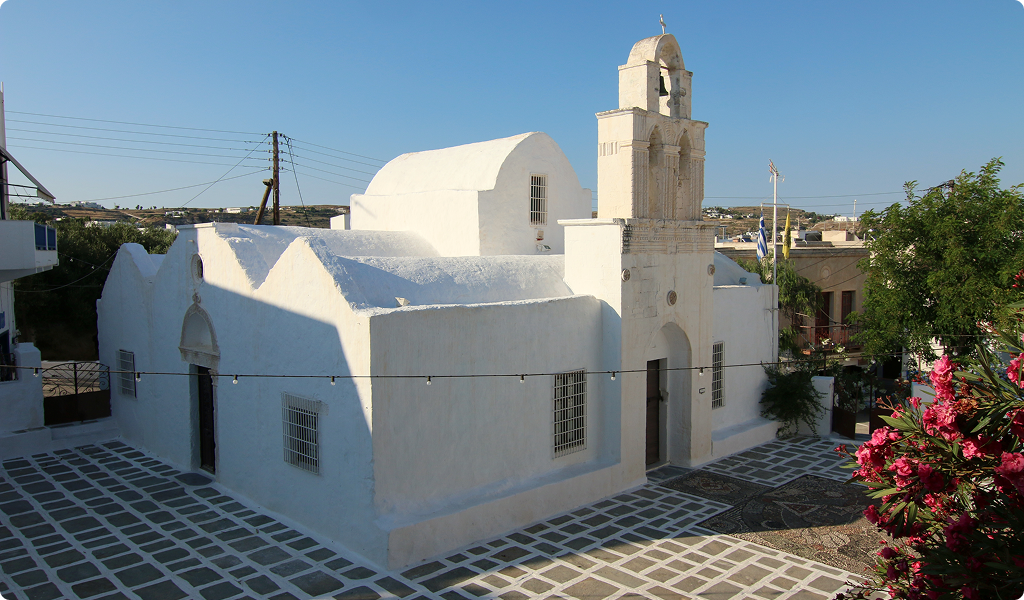
Housed inside the Church of Agia Triada: a Byzantine church with roots going back to the 9th century, the Ecclesiastical Museum is one of those places that rewards the curious visitor who happens to wander in.
The collection includes icons from the Cretan School dating to the 14th century, intricate wood-carved iconostases from the 17th century, silver goblets, epitaphs, and an episcopal throne of remarkable craftsmanship.
It's small, rarely crowded, and genuinely beautiful. The kind of museum that makes realise Milos is more than just beaches.
How to Do It All in One Morning
The catacombs, the ancient theater, and the Venus de Milo site are all within easy walking distance of each other, clustered between Trypiti and Klima. Start at the catacombs when they open to join the first guided tour, walk up to the theater, find the information board marking the Venus site, and then head down into Klima for a swim and lunch at Astakas.The Mining Museum and Ecclesiastical Museum are both in Adamas, a short drive away. Pair them on a separate morning, or on a day when the meltemi winds make the beaches less appealing.
A Note from Efi
The catacombs are a five-minute walk from Efi's front door. They've never lost their ability to surprise people who visit them - even those who thought they were just stopping in for something to tick off the list.
.webp)
.webp)
.webp)
.png)
.png)