

Milos is not one place. It's a dozen small worlds scattered across 160 square kilometres of volcanic rock, each with its own personality, pace, and reason to linger. You could spend a whole trip without leaving the beaches - and it would be a good trip. But the people who go home genuinely changed are usually the ones who took the time to walk the villages too.
We'd love for you to be one of those people. So here's where to start - and where to go next.
Trypiti - Your Home Base
Let's start here, because honestly, you might not need to go anywhere else to have a perfect evening.
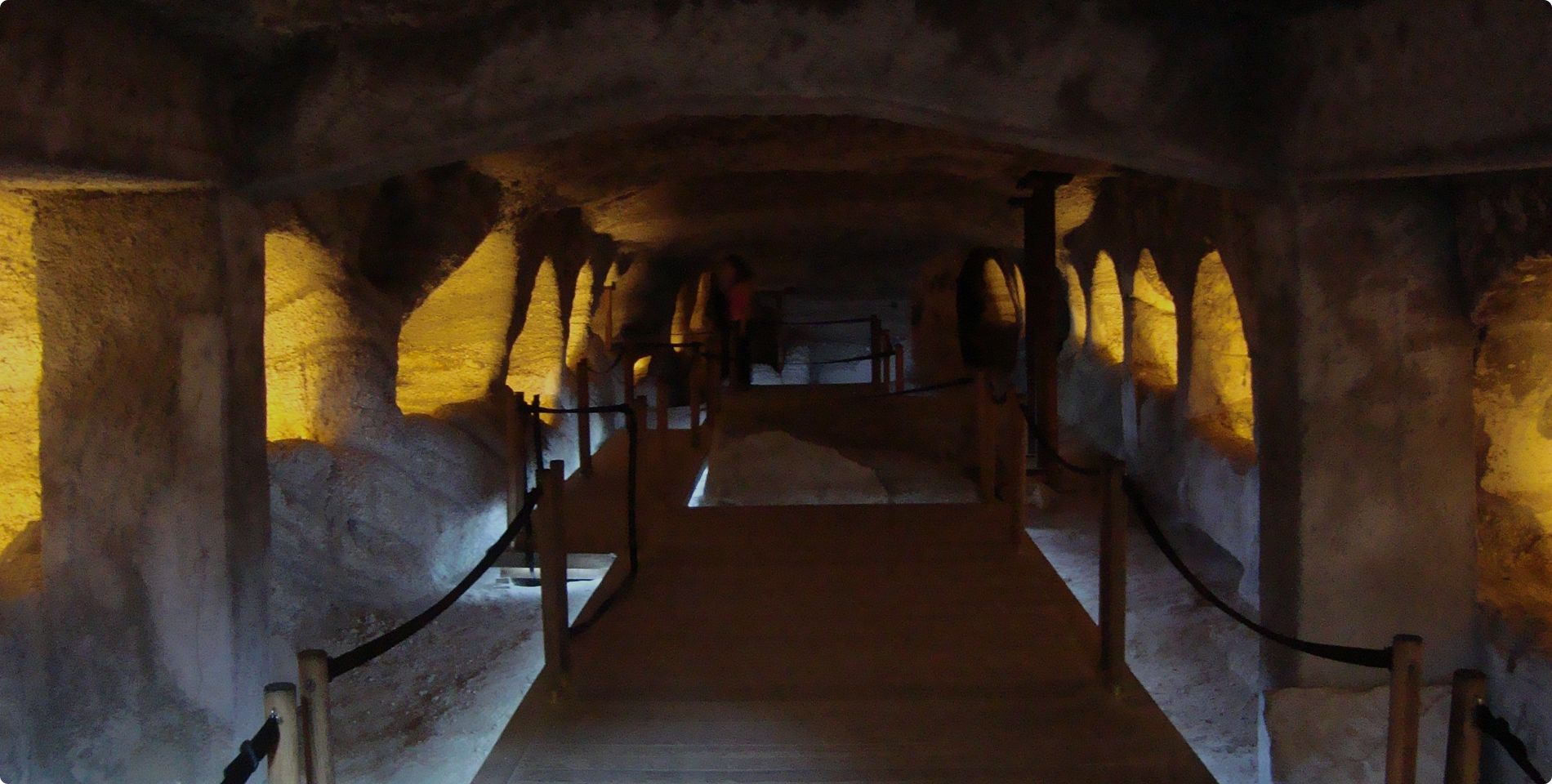
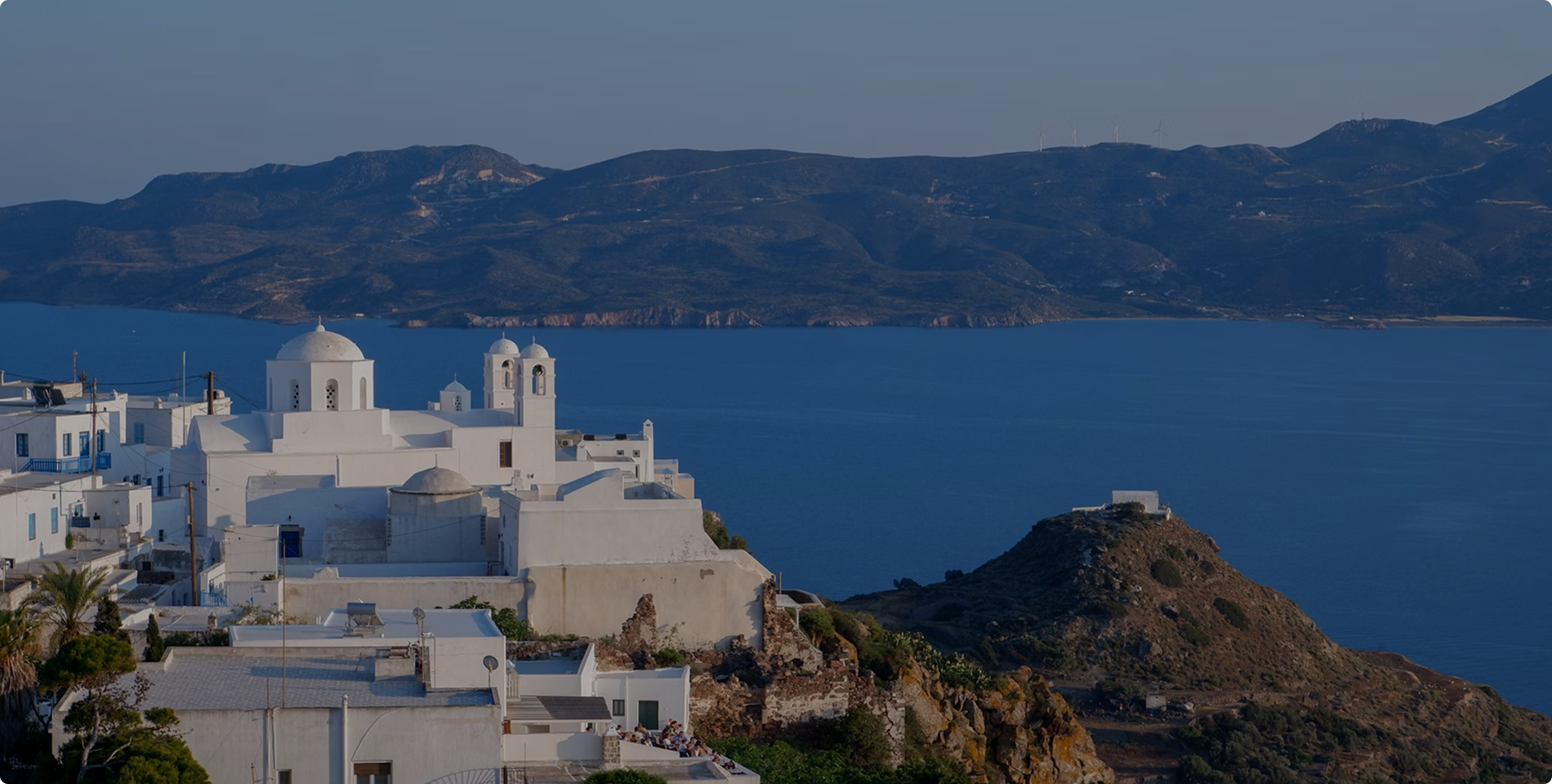
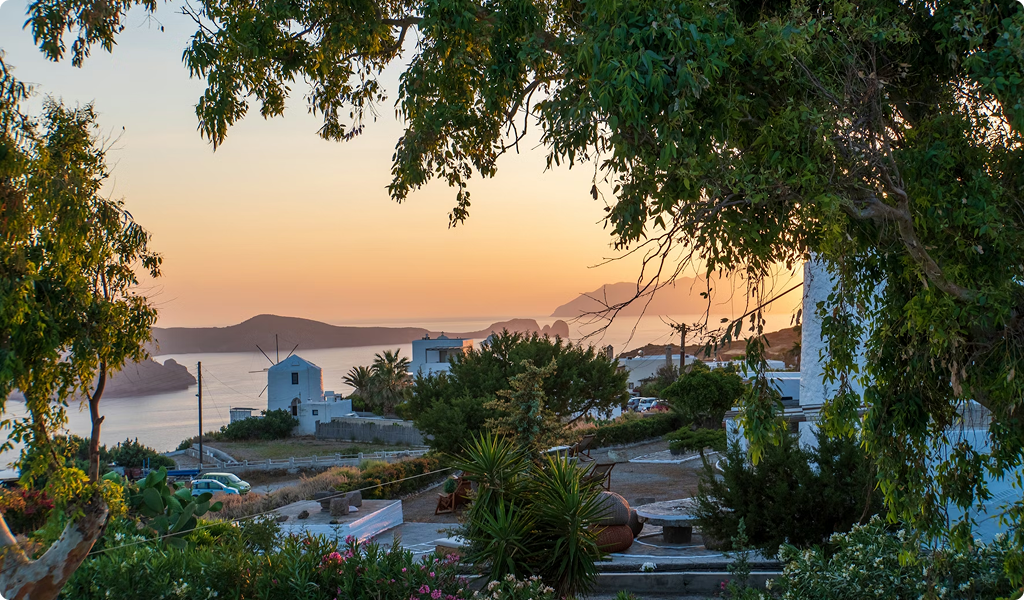
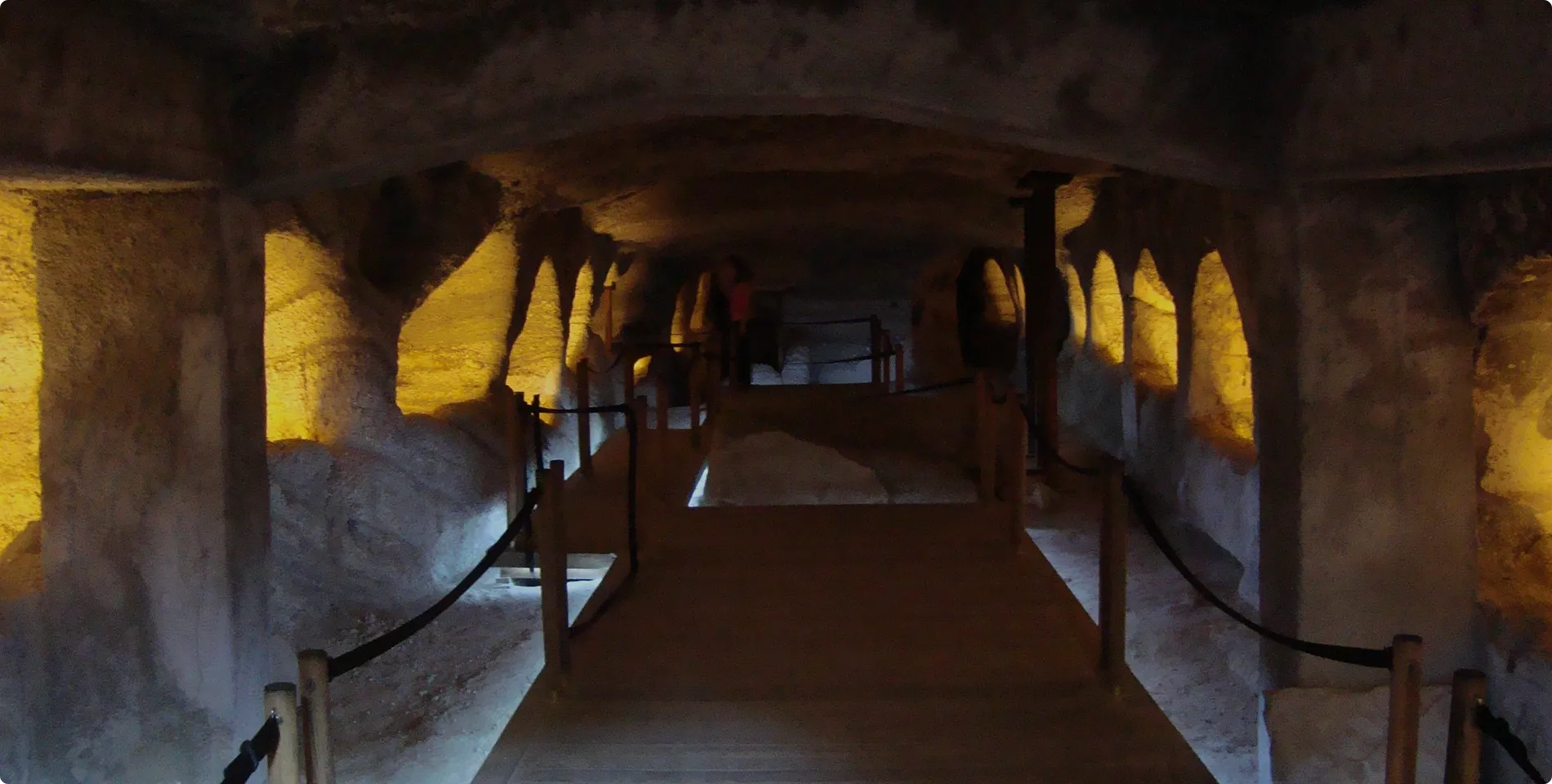
Trypiti is a small hilltop village perched above Klima, less than a kilometer south of Plaka. Its name, which translates loosely as "the one with holes", comes from the soft volcanic rock beneath it, riddled with ancient burial chambers and tunnels. It's a place that has been quietly inhabited for centuries, and it shows: narrow cobblestone streets, old windmills on the hilltop that now serve as holiday rentals, and a beautiful church at the centre of town.
The village has a hidden square: tucked between two buildings on the main alley, with old lampposts and park benches and a view straight down over the fishing village Klima and out to the sea. A couple of restaurants place their tables outside in the evenings. It becomes the kind of place you stumble across, sit down at, and don't leave until the sun is gone.
Speaking of restaurants, Trypiti punches well above its size on that front. There's a local favourite sitting inside a traditional house with a balcony view that earns every description thrown at it, serving handmade pies and pasta that have been done the same way for years. Another slow-cooks its meat in a wood oven and has a garden terrace that makes you want to skip dessert and order another round instead.
Just below the village, a short walk downhill, are the catacombs and the ancient theater. Keep going from there and the path leads all the way down to the fishing village at the water's edge with colourful boathouses, a dock, a taverna. The whole walk takes around 30 to 40 minutes and ends with your feet practically in the sea. It's one of the best hours you'll spend on the island.
The Ones Everyone Knows
Plaka
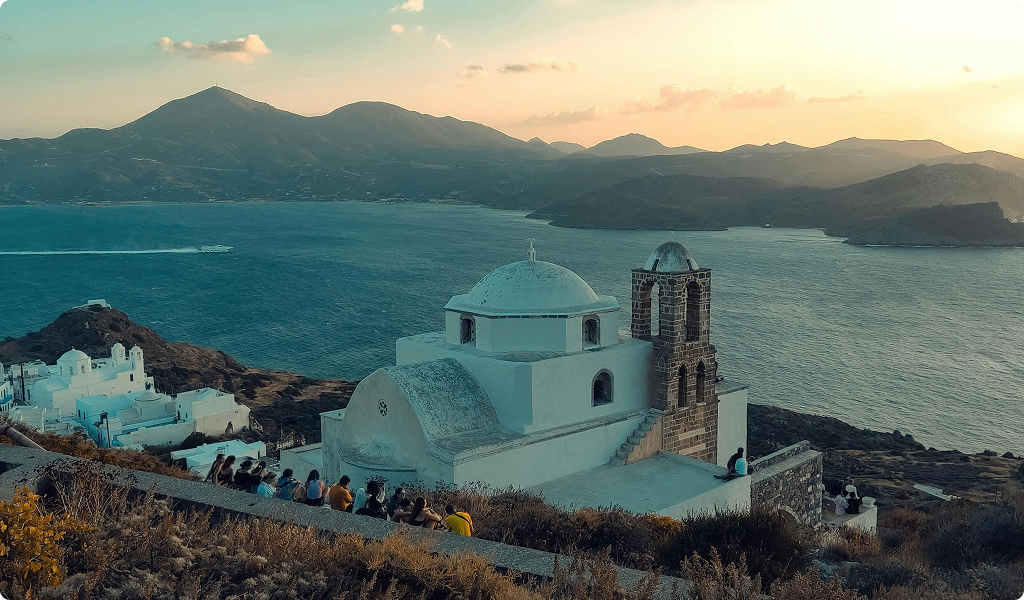
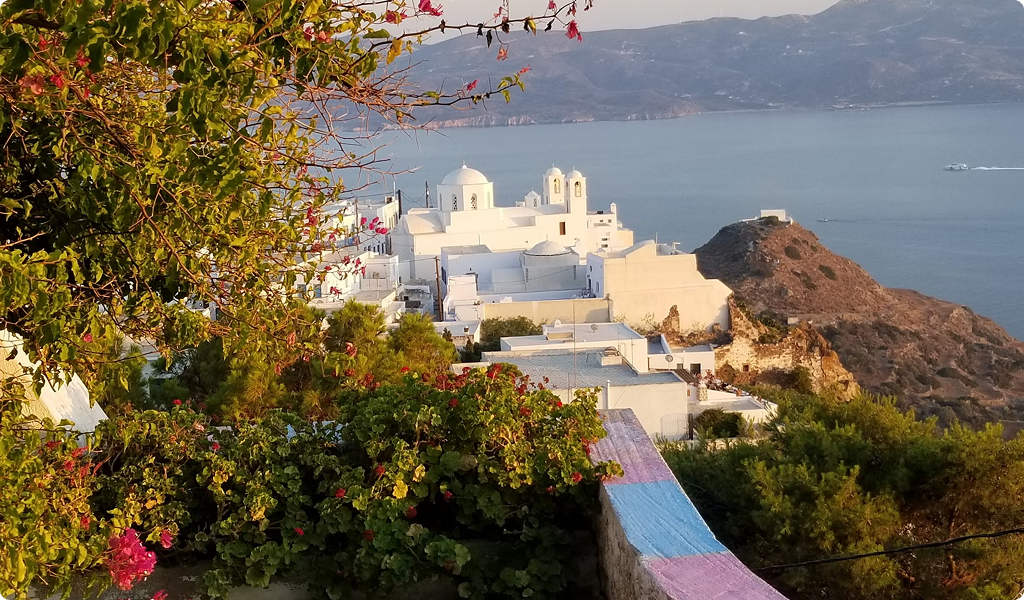
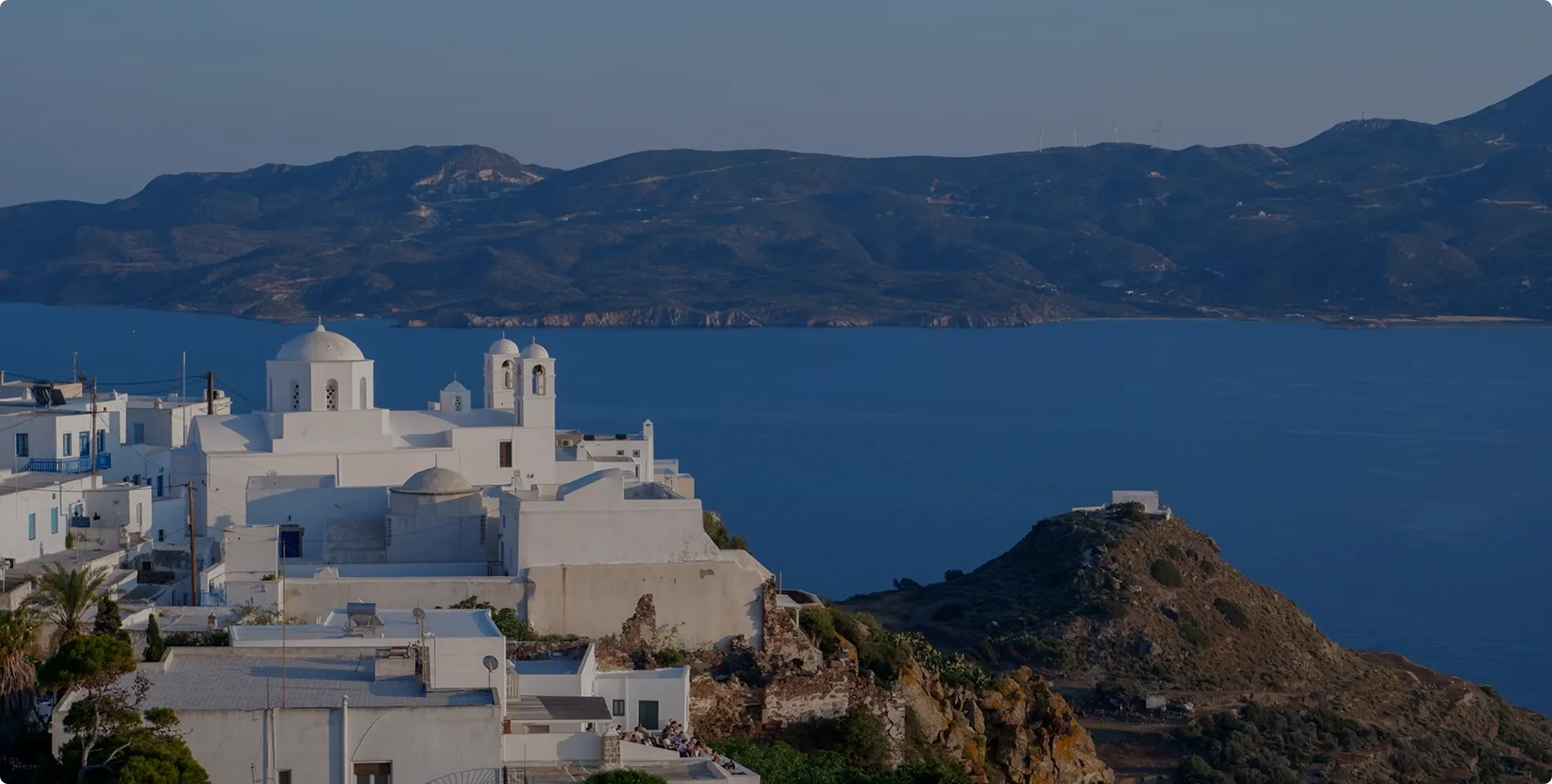
Plaka is the island's capital, and it lives up to the title in the best possible way. Whitewashed alleys, bougainvillea spilling over doorways, boutique shops, an Archaeological Museum with a full-scale replica of the Venus de Milo, and a Venetian castle at the top of the hill with views that stretch across the entire island.
The sunset from Plaka - either from the marble terrace of the Panagia Korfiatissa church or from the castle ruins above it - is the most celebrated on Milos for a reason. Arrive with something to drink, find a spot on the stone benches, and the evening tends to sort itself out from there.
Plaka is also where you'll find some of the island's best restaurants. There's a place serving Greek cuisine in a small courtyard tucked into the alleyways: slow-cooked meats, handmade dishes, the kind of food that makes you want to stay another night. Another has been feeding people from the same spot for well over a century.
Pollonia
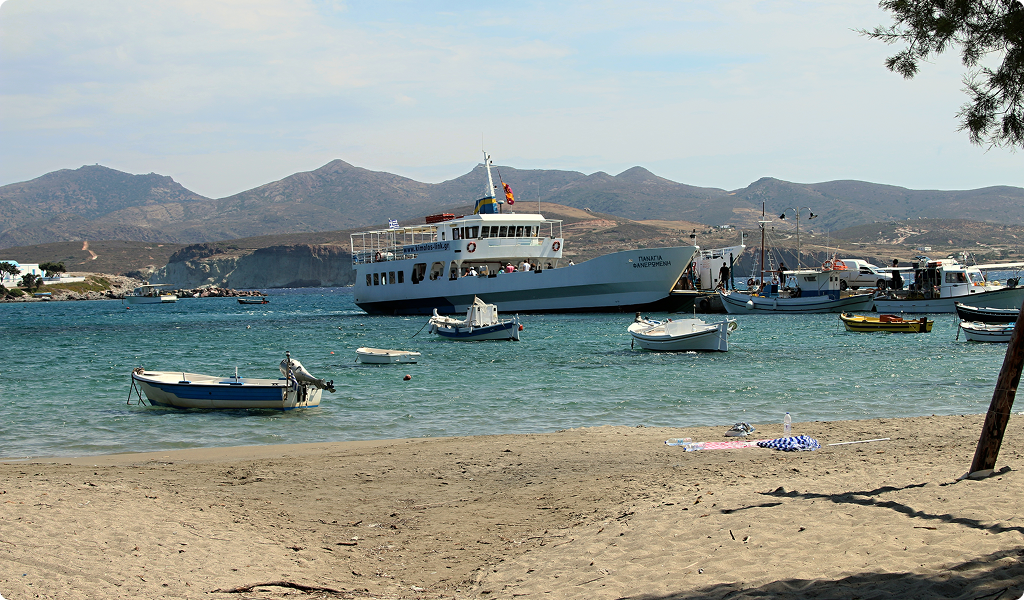
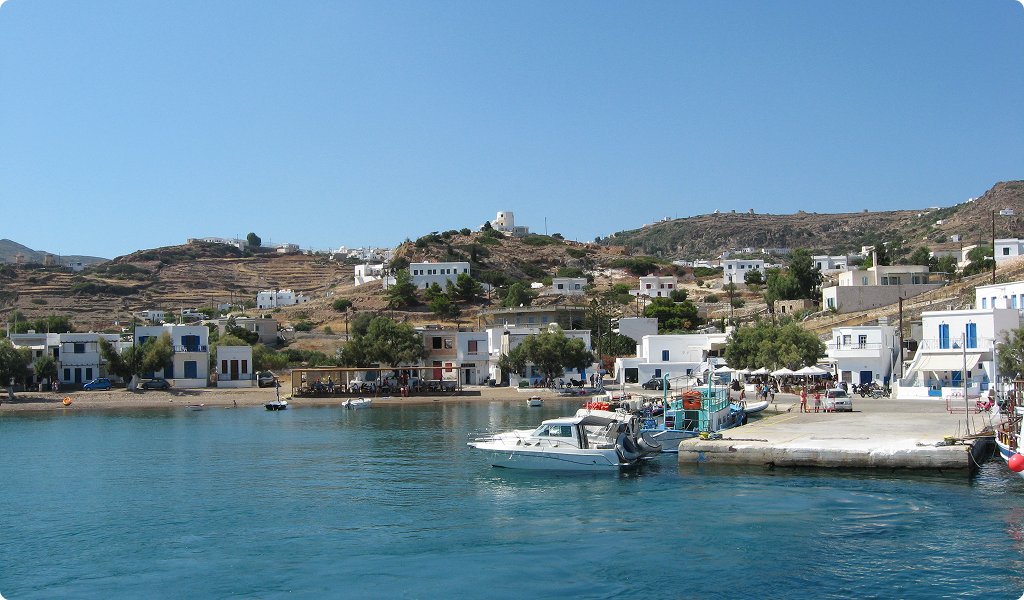
On the northeast tip of the island, Pollonia is the most relaxed village on Milos. A sandy beach, fishing boats in a small harbour, a long strip of waterfront tavernas, and a ferry departing several times a day to the neighbouring island of Kimolos.
It has the best restaurant scene on the island outside of Plaka. One standout sources most of its menu from the owner's own farm and serves the kind of fresh seafood that reminds you why you came to a Greek island in the first place. There's also a winery just outside the village - the only one on Milos open to visitors - worth an afternoon of your time if you're interested in local wine.
Adamas
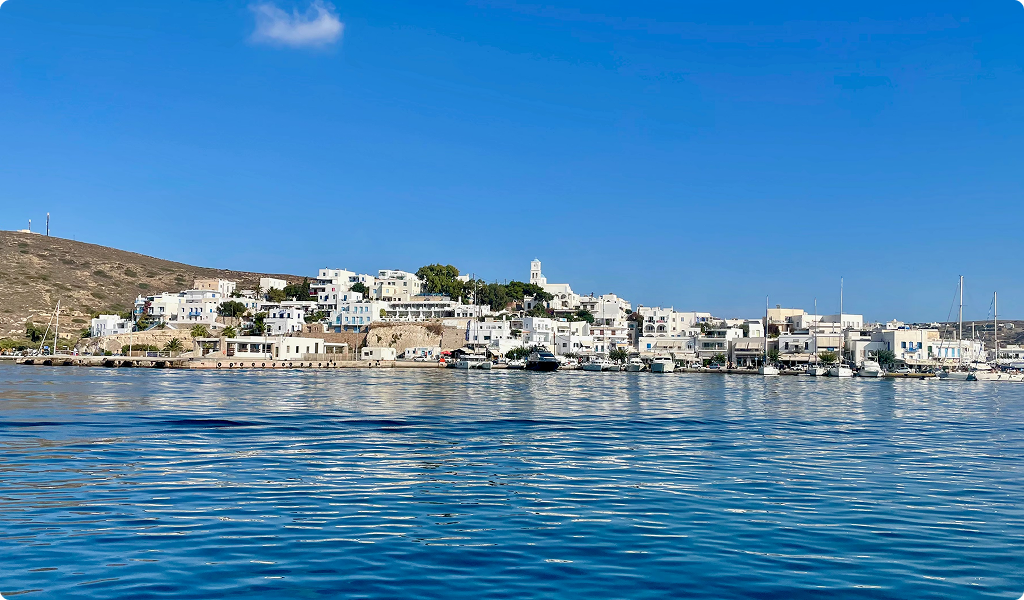
Adamas is the island's main port. It's where the ferries arrive, where most boat tours depart from, and where you'll find the biggest concentration of shops and services. It's a practical, lively place with good food and a pleasant waterfront for an evening walk, but it's a hub rather than a destination in its own right. If you arrive by ferry and head straight to Trypiti, you haven't missed anything essential.
The Fishing Villages Worth Slowing Down For
Klima
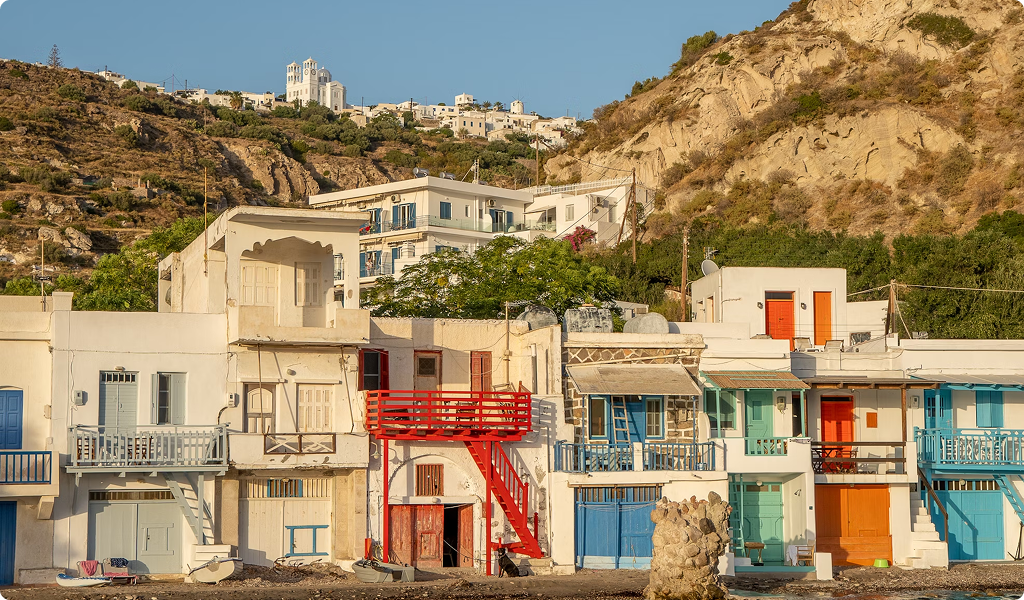
At the bottom of the path from Trypiti, Klima is one of the most photographed places in all of Greece and when you see it, you'll understand why. Two rows of traditional two-storey syrmata in blues, yellows, faded reds and whites, sitting practically in the water. The ground floors were built to shelter fishing boats; the upper floors were where the families lived. Some still are.
Walk the shoreline, swim off the dock, eat at the taverna right at the water's edge - tables so close to the sea the waves feel like company. Klima is beautiful at any time of day, but the boathouses catch the light at golden hour in a way that's genuinely hard to describe.
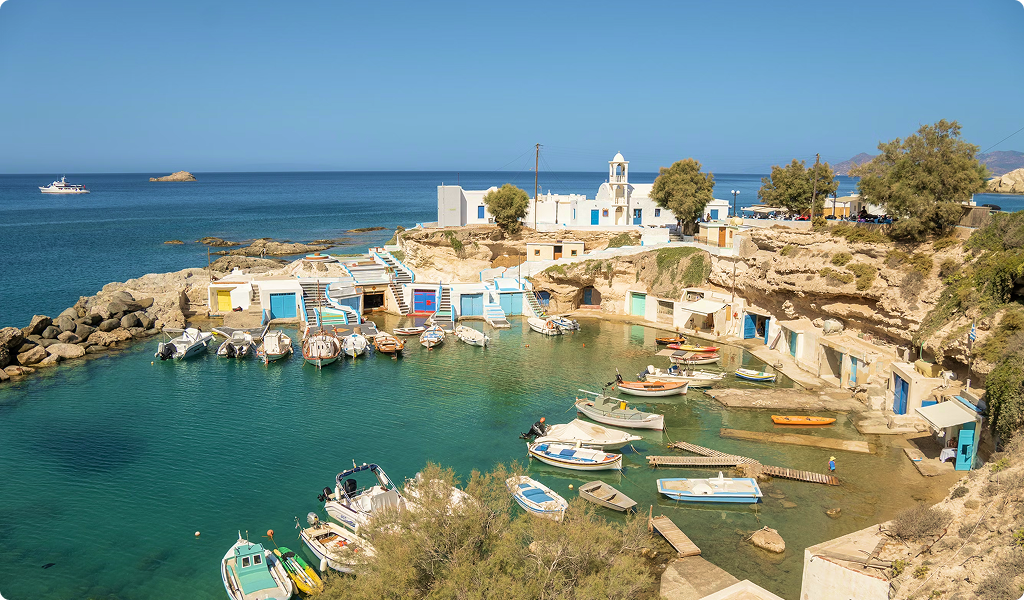
Mandrakia
Smaller and quieter than Klima, Mandrakia sits a few kilometres away along the northern coast. The same colourful boathouses, a little church right by the water, and a restaurant perched at the cliff's edge above the bay, widely considered one of the best on the island. Come for lunch, watch the afternoon light change over the fishing boats, and stay longer than you meant to. You'll be in good company.
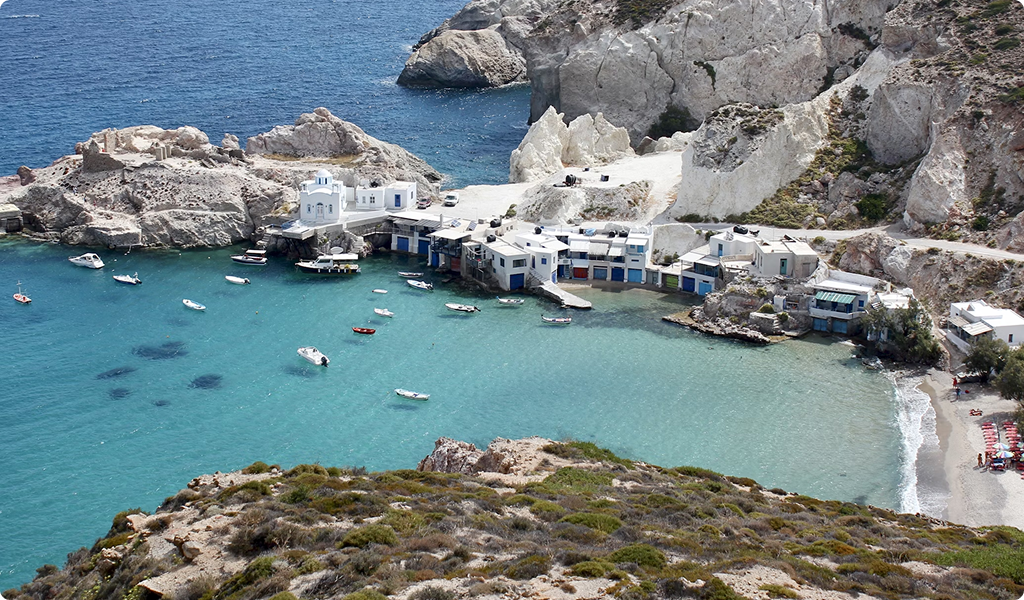
Firopotamos
Firopotamos doesn't get nearly the attention it deserves. On the northwestern coast, it's a sheltered bay ringed by fishermen's boathouses in faded whites and blues, sitting right at the water's edge. The water is crystal clear, the beach is a mix of sand and pebble, and there's a small drinks stand for when the afternoon gets serious.
The One Most People Drive Past
Zefyria
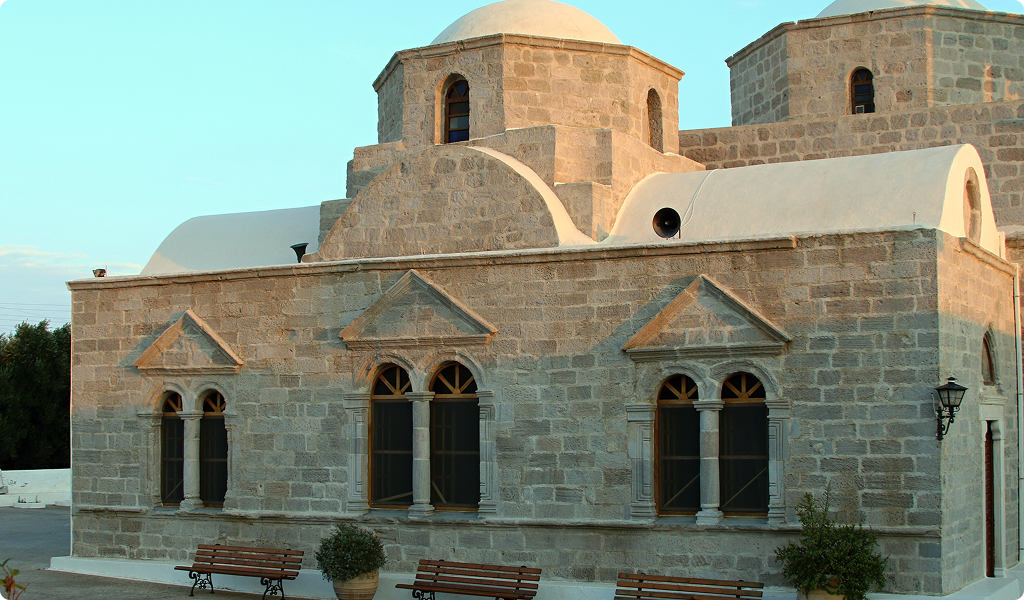
Until the 18th century, Zefyria was the capital of Milos. Then a plague swept through, and the population gradually relocated to Plaka, leaving the old town to crumble quietly into the landscape. A church still stands -well-preserved, still beautiful - and the ruins of the old settlement are visible among the overgrown paths. It's an eerie, moving place that most visitors pass on the road without stopping.
If you have an afternoon with no particular plans, it's worth the detour.
Hilltop vs. Waterfront
The hilltop villages -Trypiti, Plaka - give you distance and perspective. You look out over the island, watch the light change across the bay, feel the breeze that doesn't quite reach the coast. The pace is slower, the evenings are cooler, and the sunsets are, frankly, outstanding.
The waterfront villages - Klima, Mandrakia, Firopotamos - put you right inside the island's oldest rhythms. Fishing boats, salt air, the sound of the sea. You're not looking at Milos from above; you're sitting inside it.
Both are worth your time. If we had to pick one place to spend an evening that does both: that's Trypiti. You can sit in the square with a view of the sea, then walk down to Klima for dinner, and be back in bed before midnight.
One Step Further: A Day Trip to Kimolos
A different island, twenty minutes away.
Kimolos sits just off the northeast tip of Milos, and the ferry crossing from Pollonia takes around twenty minutes. Most people never make the trip. The ones who do tend to come back wondering why it took them so long.
It's a smaller, quieter island - no big tourist infrastructure, no crowds, just whitewashed village streets, a handful of good tavernas, and a pace of life that makes even Milos feel busy by comparison. The main village, Chorio, is a classic Cycladic settlement sitting above the port, worth a wander for an hour or two before settling somewhere for lunch.
The beaches are genuinely excellent and rarely busy. Prassa in particular has water that rivals anything on Milos. The island also has its own small castle and a lovely little archaeological museum that's easy to spend an afternoon in.
Ferries run regularly from Pollonia throughout the day in summer, so the logistics are simple: go in the morning, have lunch, explore, and be back in time for a Milos sunset.
A Note from Efi
After 35 years, we know every corner of every village on this island. The good tables, the quiet paths, the spots most guests never find. Just ask when you arrive.
.webp)
.webp)
.webp)
.png)